
Case study · Anchor clinical partner
Eight years of salivary diagnostics, integrated into routine practice.
Drs. Sara Spurlock and Jennifer Jenkins of Dental Design Studio in Norman, Oklahoma have integrated salivary diagnostics into their clinical operation continuously since 2018. The practice is the originating clinical partnership behind OraPath's methodology — they built their interpretive and patient-communication frameworks the hard way, through years of sustained clinical use. The system OraPath delivers exists in substantial part because of what Sara and Jen taught us.
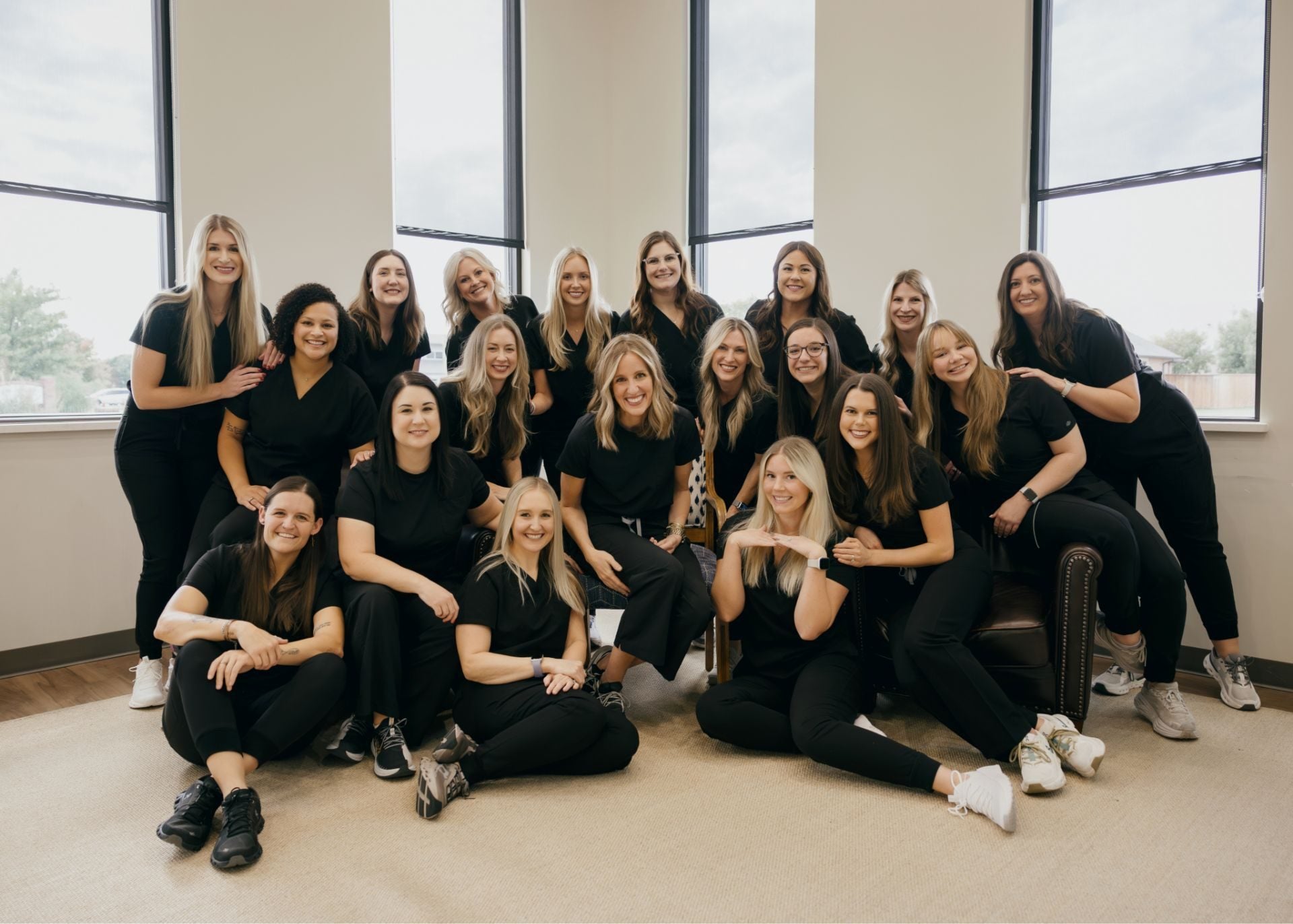
The originating partnership
They recruited OraPath. Not the other way around.
When Sara Spurlock and Jen Jenkins reached out to IMMYLabs in 2023, they had already been running salivary diagnostics in their practice for five years. They knew the category, knew what existing options offered and where those options fell short, and approached us specifically because they wanted a better diagnostic partner. Both are Kois-trained — a credential that signals comprehensive treatment planning, evidence-driven decision-making, integration of medical and dental considerations, and outcomes-focused care.
The first two product collaborations — the Essentials Panel and the Comprehensive Panel — were shaped directly by their clinical input. So were the interpretive layer, the patient-communication framework, and the chairside workflow that today underpins how OraPath integrates into routine practice. The practices that thrive with OraPath generally look like Dental Design Studio: comprehensive-care operators who take their patients' oral health as a serious clinical question and want a diagnostic partner calibrated to that level of sophistication.
What follows is a documented picture of how their practice operation evolved over eight years of sustained integration — the real production trajectory of a real practice using these tests on its own patients, year over year.
Hygiene production multiplier
Eight years of documented practice trajectory.
The headline numbers reflect the integration of molecular salivary diagnostics into routine hygiene workflow. The mechanism isn't the test itself — it's how the test enables identification of active periodontal disease, supports clear patient communication, and moves patients from prophy into the appropriate clinical category of care.
Year-by-year production data
Source: Dental Design Studio practice production reporting. Production codes shown match standard ADA CDT code references.
| Metric | 2018 | 2019 | 2020 | 2021 | 2022 | 2023 | 2024 | 2025 |
|---|---|---|---|---|---|---|---|---|
| Hygiene production | $853K | $996K | $1.02M | $1.45M | $1.55M | $1.88M | $2.25M | $2.21M |
| % of total practice production | 30% | 30% | 34% | 36.5% | 36% | 41.5% | 44.88% | 43.64% |
| Days worked | 668 | 762 | 682 | 903 | 966 | 1,076 | 1,236 | 1,219 |
| Patients seen | 4,736 | 5,448 | 5,022 | 6,656 | 6,640 | 7,325 | 8,314 | 8,319 |
| SRP starts (D4910 — 4+ teeth) | 297 | 430 | 465 | 951 | 1,420 | 1,809 | 2,265 | 2,545 |
| SRP starts (D4341 — 1–3 teeth) | 163 | 269 | 525 | 874 | 898 | 1,017 | 1,476 | 1,097 |
| Perio maintenance (D4346) | 3 | 0 | 5 | 214 | 265 | 275 | 334 | 393 |
| Perio risk assessments (1110.g2) | 0 | 0 | 0 | 168 | 164 | 154 | 211 | 226 |
Source: Dental Design Studio practice production reporting. The 2018–2023 figures match the Hygiene Production Multiplier reporting the practice has previously published; 2024–2025 figures are from current practice reporting.
The production trajectory above isn't a fee-increase story. Across the documented eight years, Dental Design Studio raised fees by an average of just $11 per code. The growth came from implementing a clinical perio protocol and focusing on health — not from repricing what was already being done.
“We don't believe in supervised neglect, and we work hard to inform our patients about the condition of their oral health and how it relates to their overall health. When you practice this way, you don't have to 'sell' anything.”— Drs. Sara Spurlock and Jennifer Jenkins, Dental Design Studio
Healthy patients = healthy practices.
What actually changed
The numbers reflect a clinical reorientation, not a sales motion.
It would be easy to read the production growth as the result of more aggressive treatment planning. The actual mechanism is more substantive — and more clinically defensible. The molecular testing surfaces active periodontal disease that traditional pocket-and-bleeding assessments miss. Cases that would have stayed in the prophy category get correctly moved into the appropriate periodontal therapy category. The objective microbial evidence supports patient communication in ways that probing depths alone do not.
Sara and Jen frame it as a rejection of supervised neglect — the slow accumulation of untreated disease that gets observed but never addressed across years of routine recall. When the work is done that way, the treatment plan doesn't need to be sold. The evidence speaks for itself.
The growth in perio maintenance is the most clinically meaningful signal in the data. Going from three appointments per year to nearly four hundred represents a category of care that effectively did not exist at the practice before molecular diagnostics were integrated.
And the growth happened alongside an expanding patient base — patients seen grew from about 4,700 to about 7,300 over the documented years. The mix shifted because the diagnostic framework supported a different clinical conversation.
The clinical workflow
One patient. One message. One decision.
The chairside workflow Sara and Jen built around molecular diagnostics is the structural reason the numbers above hold up year over year. Every role on the clinical team has a defined moment, defined language, and a defined intent. The patient gets one consistent message across five touchpoints.
Identify & educate
The hygienist identifies clinical concern during routine examination and frames the sample collection in terms the patient can immediately understand.
- Role
- Identify & educate
- Intent
- Build awareness and explain the why behind the sample collection.
Clinical handoff
The hygienist primes the doctor with the specific clinical context, naming what was observed and what was collected.
- Role
- Prime the diagnosis
- Intent
- Provide clear clinical context and a named clinical concern.
Confirm & elevate
The doctor validates the hygienist's clinical observation and elevates the substance of why molecular testing matters for this case.
- Role
- Confirm & validate
- Intent
- Elevate the clinical concern and validate the diagnostic need.
Transfer intent
The hygienist communicates clinical readiness and patient commitment to the front-desk team before the patient leaves the operatory.
- Role
- Transfer intent
- Intent
- Communicate readiness and patient commitment.
Close
The front desk presents the value clearly and secures the same-day yes — the patient commits to processing the sample while the clinical conversation is fresh.
- Role
- Close the decision
- Intent
- Clearly present value and secure the same-day yes.
For other practices
What the Dental Design Studio data means for practices considering integration.
The honest answer is that no single case study tells a practice what their numbers will look like. Dental Design Studio is a comprehensive-care practice with Kois-trained practitioners and a hygiene team that built clinical fluency with molecular testing over eight sustained years. Practices earlier in that integration journey will see different numbers on different timelines.
What the data does show is the trajectory available when the integration is done well — with clinical infrastructure, team training, and a chairside workflow that turns objective microbial evidence into clinical conversations patients can act on. These results aren't an outlier; they're what's structurally possible when the test is treated as the start of a clinical conversation rather than an isolated diagnostic event.
The role of OraPath is to provide the diagnostic substance — the panels, the interpretive layer, the clinical decision support, the laboratory — and the team support that makes adoption viable. Sara and Jen's contribution is the clinical conscience and the originating clinical experience that the rest of the system is built on.
Next steps.
The case study above documents what integration looks like over time. The next step for most practices is a direct conversation with our clinical team to talk through fit, workflow, and what implementation could look like.